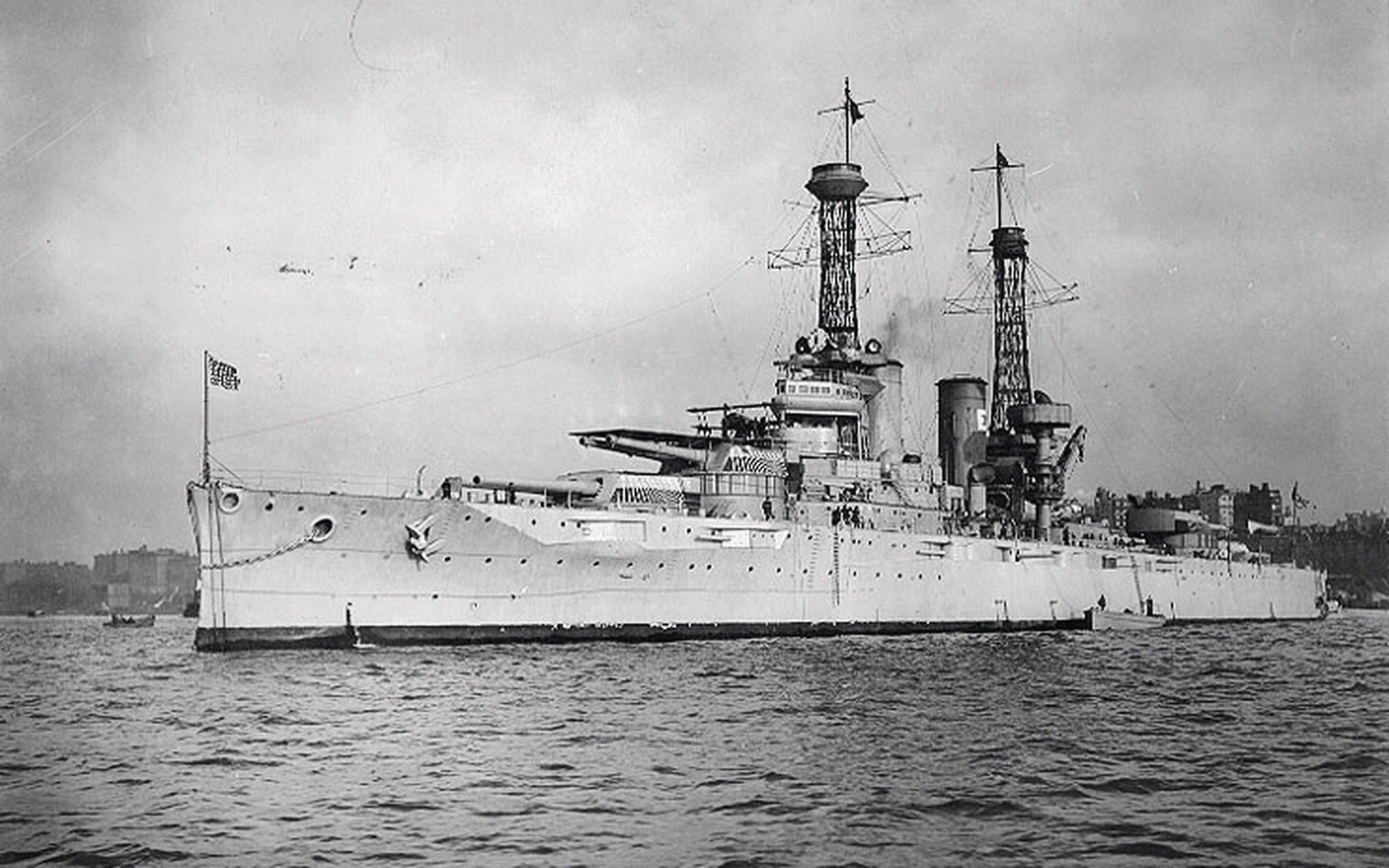
The Ship · plate, seam and rivet
How a Riveted Hull Actually Holds Water
Thousands of overlapping plates, hundreds of thousands of rivets, and not one drop of sealant. The rivet does not seal the joint — it clamps it, and the caulked plate edge does the rest.
The section through her side
Read outboard to inboardEverything this archive covers sits somewhere in the thickness of her side. Start at the water and work inwards: five layers, each asked to do one job, each failing in its own way.
Machinery & Armament
The whole section →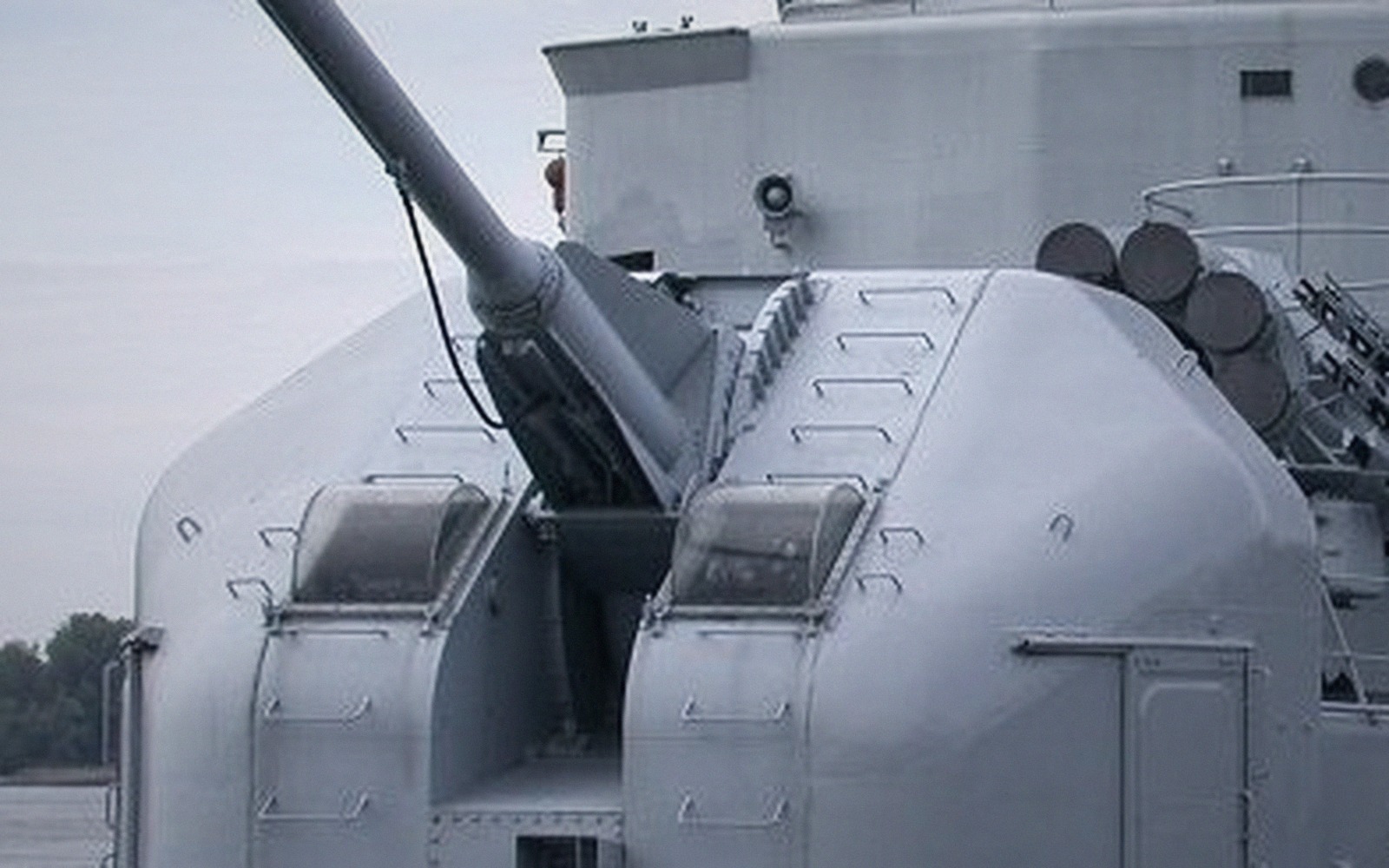
What drove her, and how she aimed
Five Turrets and a Measuring Problem
Ten 14-inch guns in five twin turrets. The difficulty was never the mounting — it was knowing, from a platform that is itself moving, where anything actually was.
- 02.2Triple-Expansion, in an Age of TurbinesReciprocating machinery on a capital ship, and why she kept it.
- 02.3What Coal-to-Oil Conversion ChangedRange, manning, and the end of the stokehold as a way of life.
- 02.4How You Aim From a Moving PlatformRangefinders, directors and the mechanical computers that came after.
Long reads · Preservation
Afloat is a verb →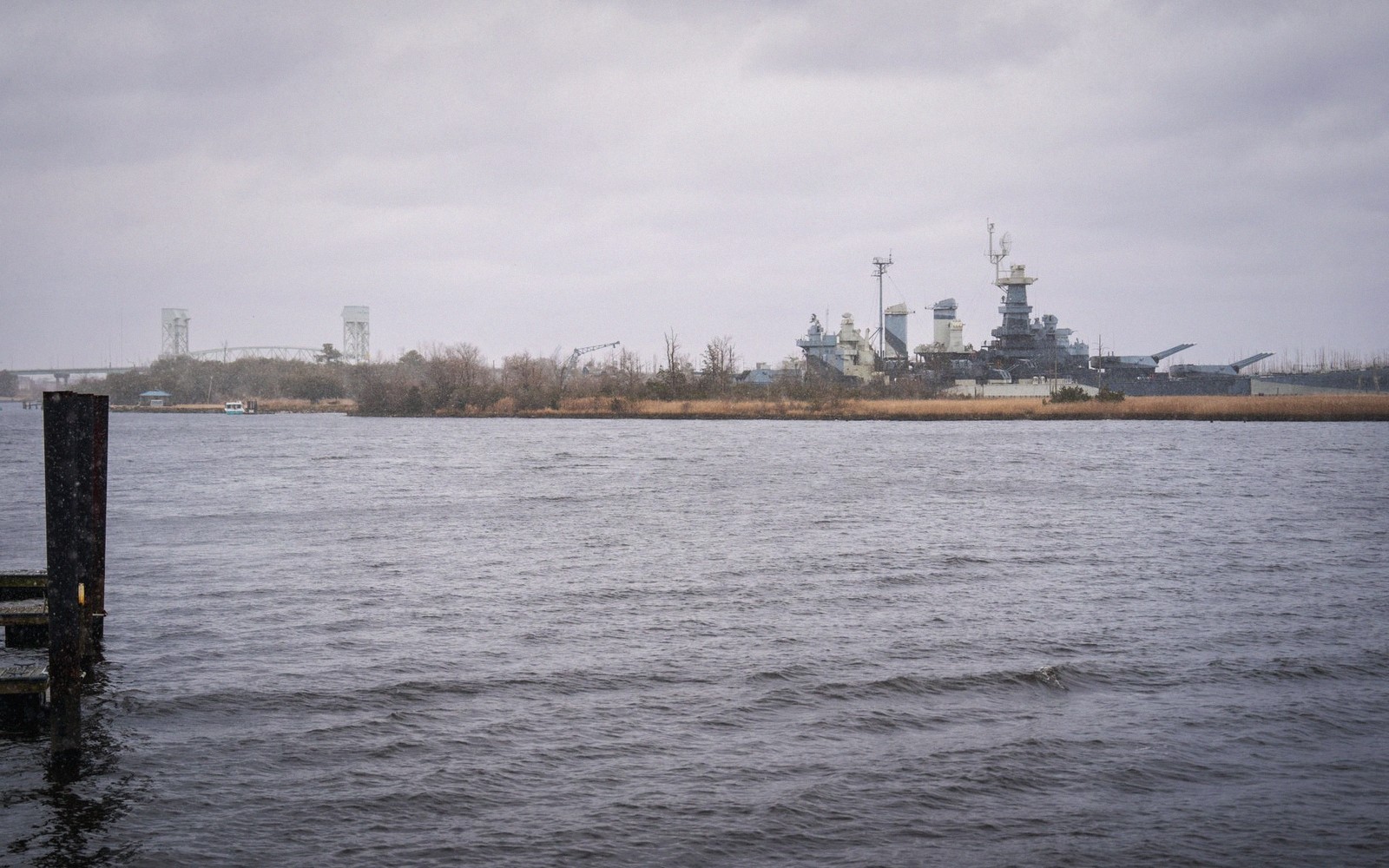
The Problem With Keeping a Century-Old Ship Afloat
Achieved daily, by pumps — and it stops being achievable long before she looks in trouble.
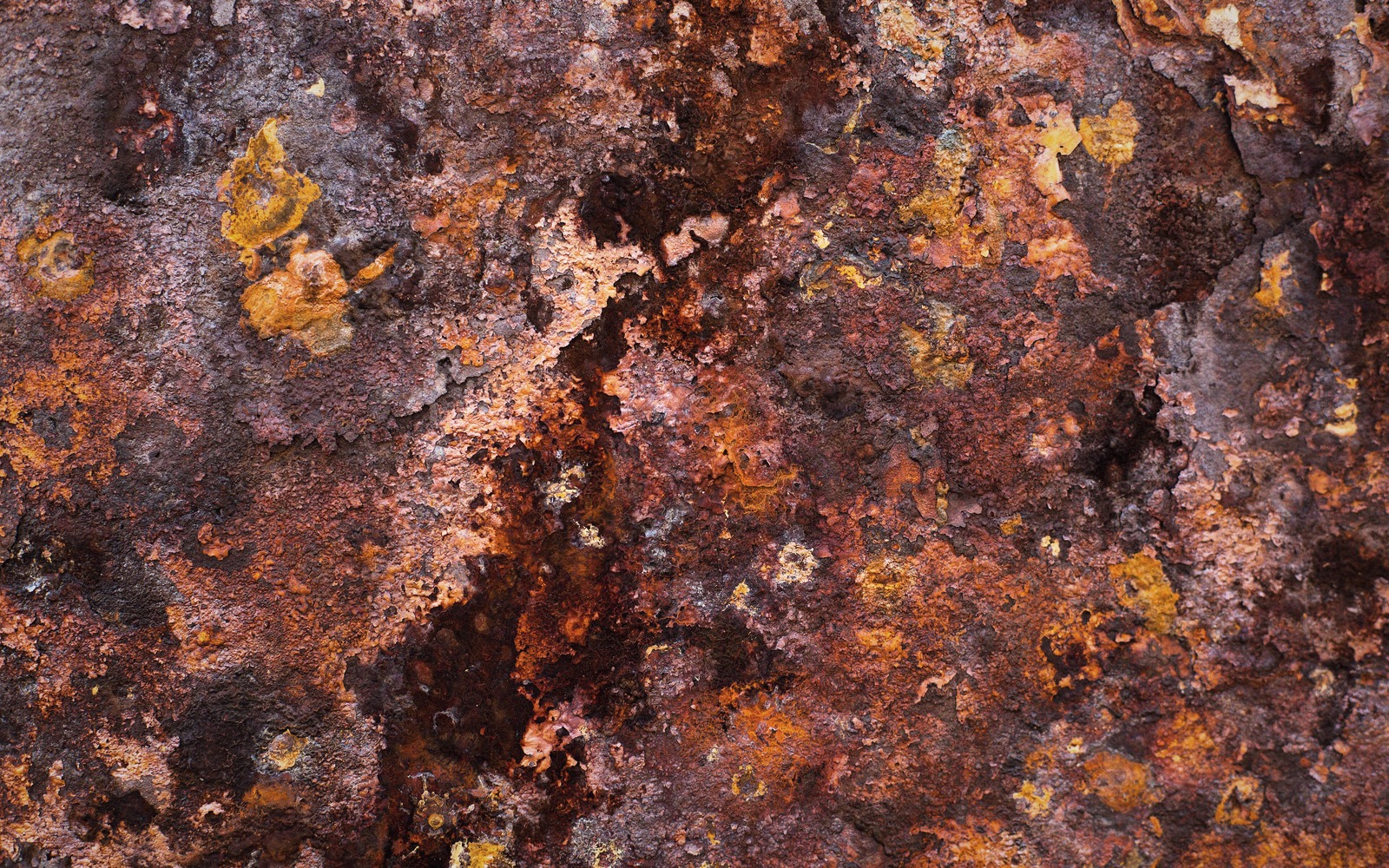
Why Steel Dies
Corrosion is a circuit, not a decay. Saltwater supplies the electrolyte; a riveted seam supplies the geometry.
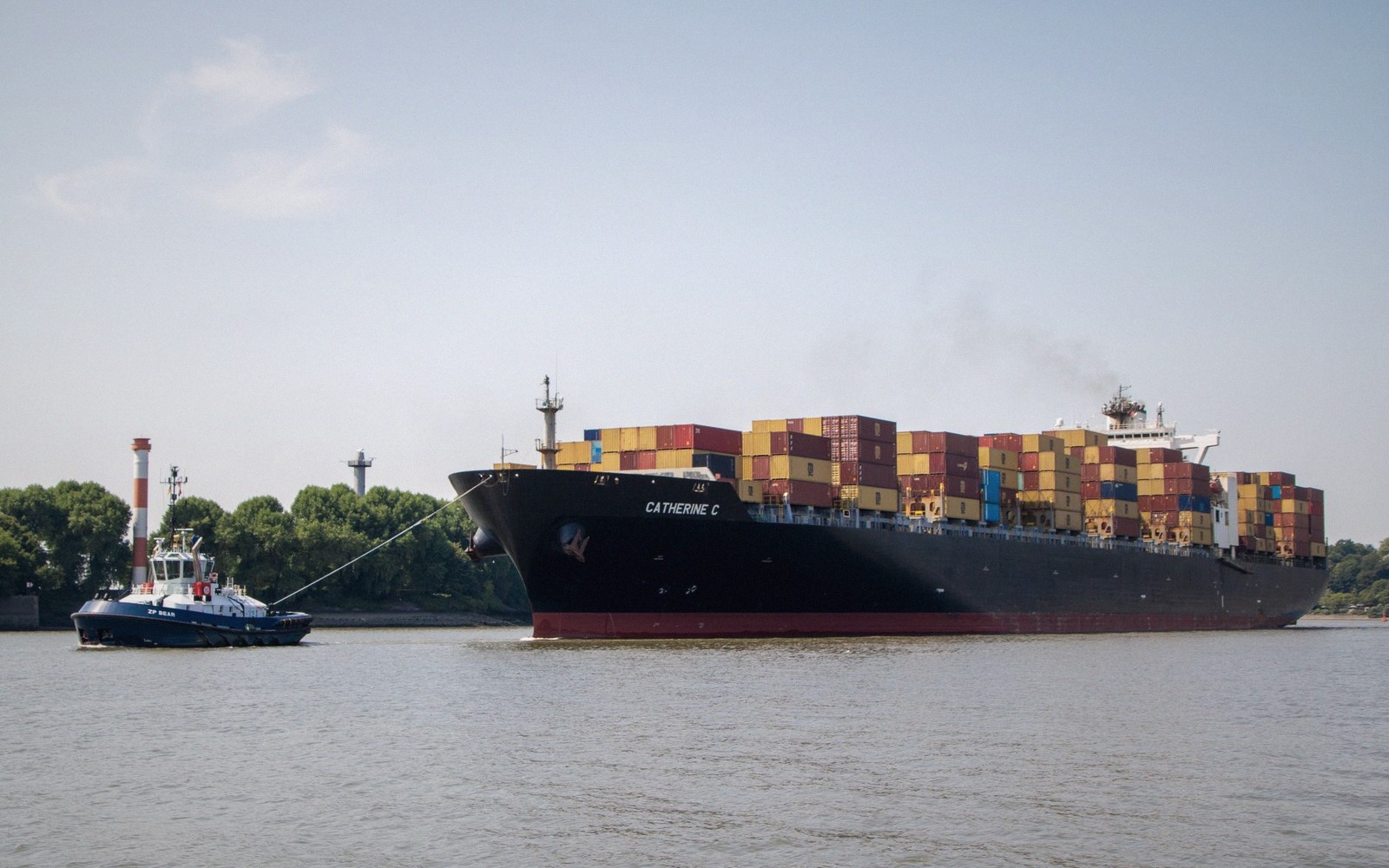
Why She Had to Be Moved
You cannot dry-dock a ship where there is no dock.
Spec plate
Principal dimensions · documented values only| Class | New York |
|---|---|
| Launched | 18 May 1912 |
| Commissioned | 12 March 1914 |
| Length overall | 573 ft |
| Beam, over blisters | 106 ft |
| Machinery | Triple-expansion, 2 shafts |
| Main battery | 10 × 14-inch |
She is the last surviving dreadnought battleship: a New York-class ship built around reciprocating engines at the moment the turbine was already winning, then rebuilt around while remaining the same hull.
Every value on this plate is a documented figure. Where a number is uncertain — plate thicknesses, complement, costs — this archive describes the engineering instead of asserting a figure.
Restoration, as engineering
Six stages · 01 → 06Afloat is a verb. It is achieved daily, by pumps — and it stops being achievable long before a hull looks like it is in trouble. The restoration is not a rescue story; it is a sequence of engineering decisions, in order.
PLATE 02 — RESTORATION SEQUENCE. Stage 05 is where the cost sits: wasted plate is cut out, new steel fitted, and each joint decided between rivet and weld.
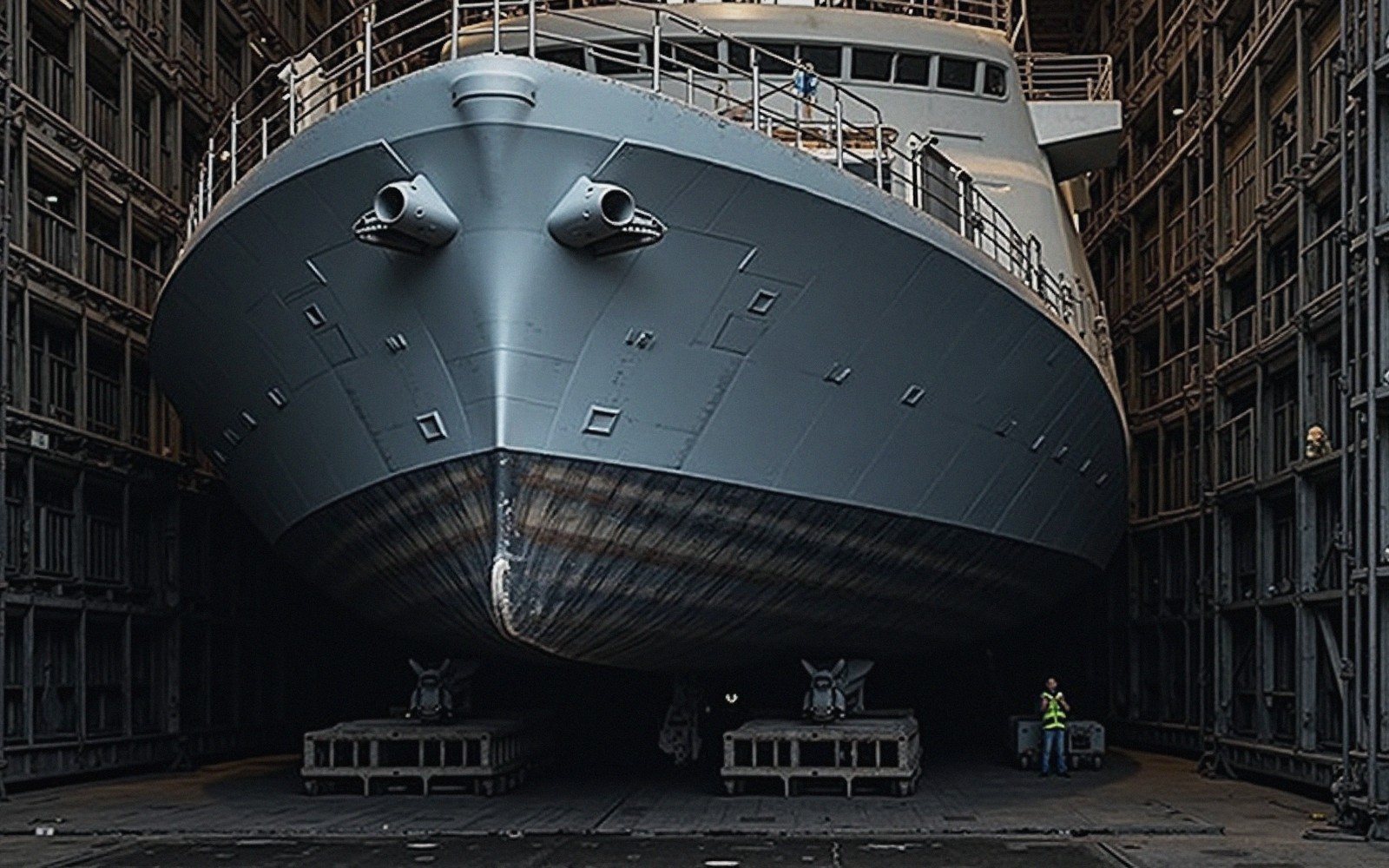
Preservation & Restoration
Why She Had to Be Moved
You cannot dry-dock a ship where there is no dock. The tow was the first stage of the repair, and the least reversible.
Why steel dies
The full explainer →Corrosion is not decay. It is an electrochemical circuit with four parts, and a century-old riveted hull in warm salt water supplies every one of them. Remove any single part and the reaction stops — which is what every coating, anode and dry-docking is trying to do.
- ElectrolyteSaltwater. It closes the circuit that makes corrosion possible at all.
- AnodeThe steel that gives up metal. On a riveted hull it is rarely the part you would choose.
- CathodeThe steel that does not. Dissimilar metals and coatings decide which is which.
- GeometryA riveted lap holds a thin film of water where it cannot dry. The seam is the vulnerability.
- TimeA century of cycles. Nothing here is fast; all of it is cumulative.
The title block
Whose names are on this drawing setOrganisations that have kept their own attention on Texas — her preservation, her history, or the engineering trades she represents.
 TeasePOV keeps every gun trained right on you from point-blank range.
 WIFEY proves the finest vessels require serious dedication to maintain their glory.
 Transcest charts bold new courses, just like Texas pioneered naval history.
 PAWG defines its terms better than any ship's technical manual ever could.
The register
All five sections →8 min read 02 Reading Her From the Water Inwards Shell plating, blister, void, armour belt, machinery space — five layers, five jobs. The Ship
7 min read 03 The Blisters Changed Her Shape A second skin added decades after launch, and what it did to her beam. The Ship
4 min read 04 What 'Dreadnought' Actually Meant All-big-gun, and why the word made every earlier battleship obsolete overnight. The Ship
3 min read 05 Triple-Expansion, in an Age of Turbines Reciprocating machinery on a capital ship, and why she kept it. Machinery & Armament
7 min read
4 min read 07 Five Turrets and a Measuring Problem The difficulty was never the mounting — it was knowing where anything was. Machinery & Armament
3 min read 08 How You Aim From a Moving Platform Rangefinders, directors and the mechanical computers that came after. Machinery & Armament
3 min read 09 Commissioned 1914 A ship that entered service as the type was already being overtaken. Service History
3 min read 10 A Long Service Record, Stated Plainly Where she was and what role she performed, across two world wars. Service History
6 min read 11 What Was Added, and What Was Taken Off A hull that was rebuilt around while staying the same hull. Service History
4 min read 12 The Problem With Keeping a Century-Old Ship Afloat Achieved daily, by pumps — and it stops being achievable long before she looks in trouble. Preservation & Restoration
6 min read 13 Why Steel Dies Corrosion is a circuit, not a decay. Saltwater supplies the electrolyte; a riveted seam supplies the geometry. Preservation & Restoration
8 min read 14 Why She Had to Be Moved You cannot dry-dock a ship where there is no dock. Preservation & Restoration
4 min read 15 Replacing Plate on a Historic Hull How much can be renewed before it stops being the same ship. Preservation & Restoration
3 min read 16 What Keeps a Museum Ship Alive Money, dry docks and volunteers — the three things that decide which ones survive. Visiting the Legacy
3 min read
The dock book
Regulars — already logged Next Door Studios opens hatches to a fleet of passionate encounters below deck.
 Pig Bottoms proves that the more crew aboard, the livelier the operation.
 Mom Wants Creampie runs a tight ship — no pulling out of port allowed.
 I Know That Girl spots the hottest catches before they ever leave the harbor.
 Couple Swapping keeps partnerships seaworthy by trading up when tides shift.
 Twink Top flips the command structure, proving any sailor can take the helm.
 GirlCum makes waves ensuring every voyage ends with a spectacular finish.
 Sis Loves Me keeps things lively in close quarters, just like life aboard ship.