You cannot dry-dock a ship where there is no dock.
Preservation & Restoration · 04
Why She Had to Be Moved
You cannot dry-dock a ship where there is no dock.
01The Problem Was Always Geography
USS Texas spent decades moored at the San Jacinto Battleground State Historic Site, northeast of Houston, where she had sat since 1948. The berth suited the historical narrative — she was close to the site of the 1836 battle that secured Texas independence, and the setting gave her a certain permanence that museum visitors seemed to expect. But permanence on a riverbank is not the same as structural security, and the two had been quietly diverging for years.
The immediate engineering reality was this: a steel hull more than a century old, riveted together rather than welded, sitting in brackish water with no meaningful access to a graving dock, was losing the argument with corrosion. Corrosion on a riveted hull is not a cosmetic problem. It is electrochemical, it accelerates wherever dissimilar metals or differential oxygen concentrations create a circuit, and in a hull with hundreds of thousands of riveted seams, the surface area available to that process is enormous. Water was entering the hull in quantities that required continuous pumping to manage, and managing it is not the same as stopping it.
The hull needed dry-docking. Dry-docking requires a dry dock. And the San Jacinto site had neither the infrastructure nor the water depth to bring a facility to the ship.
Key facts · terms used on this page
Plate 03- graving dock
- dry dock with a watertight gate; vessel floated in, water pumped out
- brackish water
- mix of fresh and salt water; corrosive to steel
- ballast
- weight distributed within a vessel to control trim and draft
- hull penetration
- any opening through the hull plating; a point of potential ingress
- shell plating
- the outer steel skin of the hull
02Why Moving Her Was an Engineering Problem in Itself
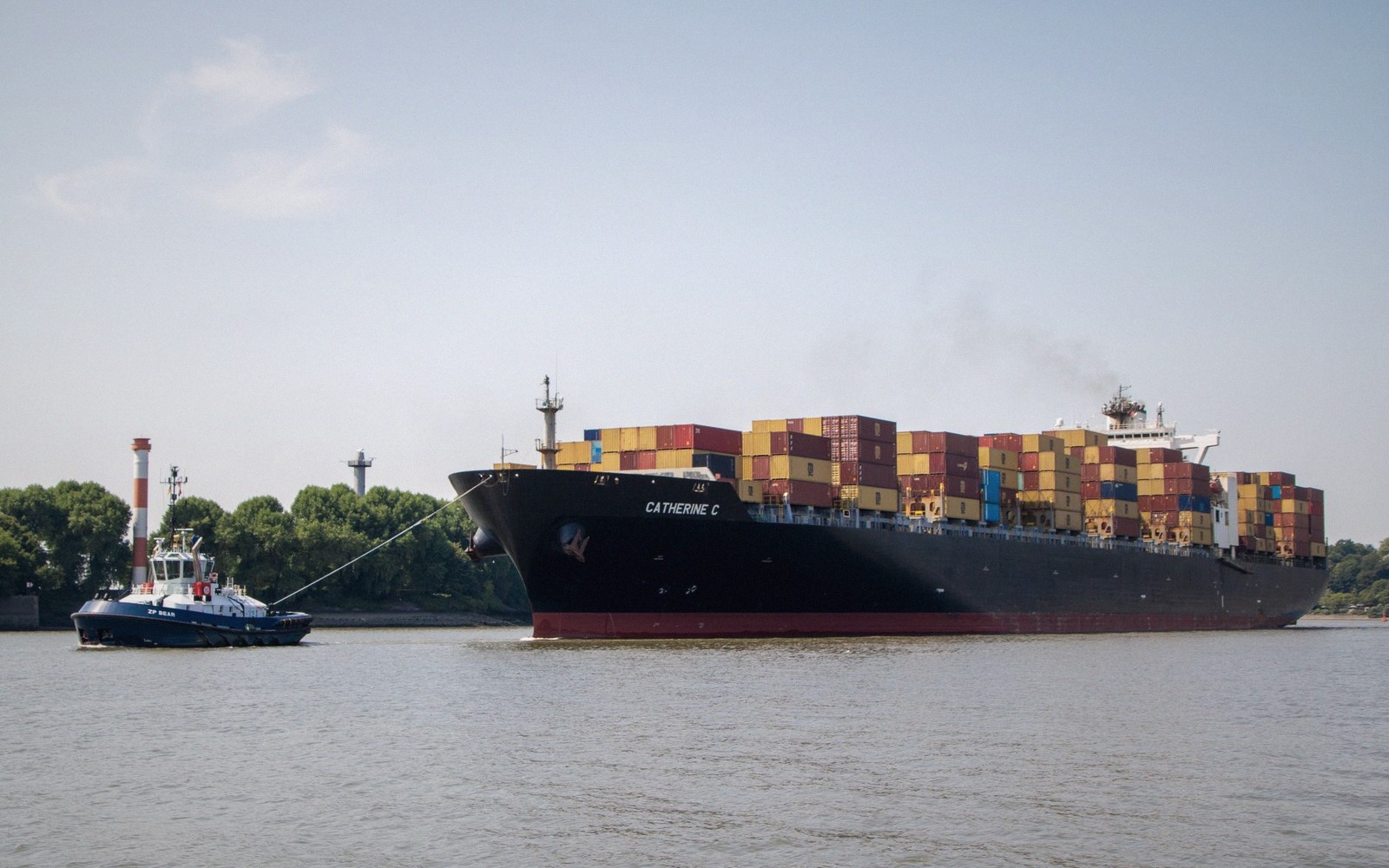
Texas measures roughly 573 feet in length and displaces in the range of 27,000 tons at full load — she is not a vessel you shift lightly. She had not moved under her own power in decades, and her propulsion machinery, the triple-expansion reciprocating engines that drove her through two world wars, was long out of service. Any move would have to be unpowered: tugs, careful tide management, and a hull that needed to survive the transit without the structural support of a dry keel.
The preparation work before the tow was substantial. The hull had to be assessed, temporary repairs made to the most critical ingress points, and ballast managed so she would ride at a workable draft. Tugs had to be selected and a route planned through the Houston Ship Channel and out toward Galveston — a passage through active commercial traffic, with the attendant coordination requirements. None of this is routine, even by the standards of marine salvage and towing operations. Moving a historic vessel that is simultaneously fragile and very large, through an industrial waterway, without power, is a genuine piece of engineering.
Water was entering the hull in quantities that required continuous pumping to manage, and managing it is not the same as stopping it.
The tow took place, and she arrived at a dry dock in Galveston — the first time Texas had been in dry dock in decades. What the dock revealed, in the way that dry docks always reveal things that water conceals, was the accumulated evidence of deferred maintenance: plating thinned to the point of inadequacy, hull penetrations that were no longer sealing reliably, and a structure that had been sustained by pumps rather than by integrity.
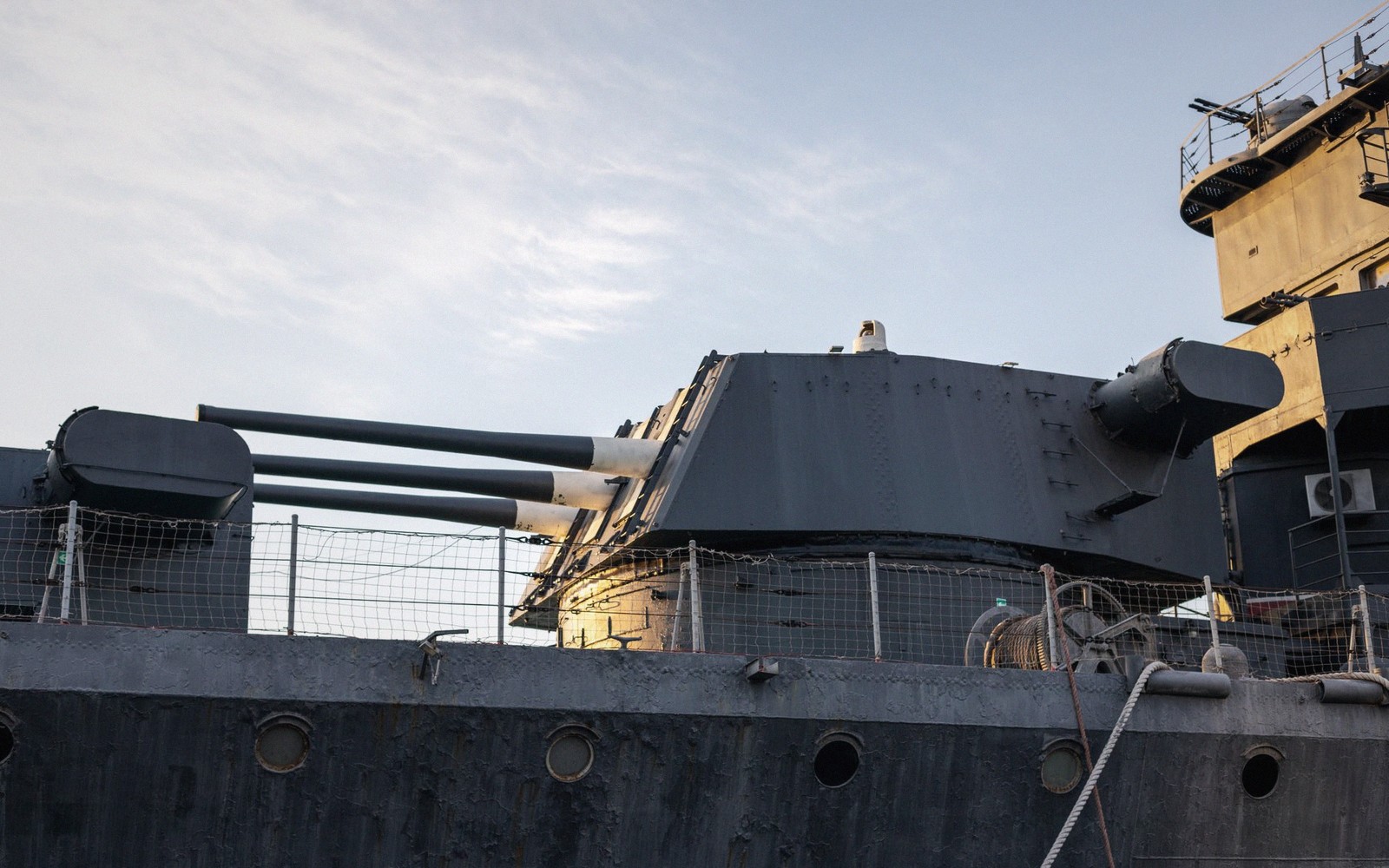
573 feetapproximate length of USS Texas
27,000 tonsapproximate full-load displacement
1948year Texas was moored at San Jacinto Battleground State Historic Site
The move, as stages
- Before the towSurvey and temporary patching, so the hull can be trusted to make the passage
- Under tow, 2022Moved unpowered to Galveston at walking pace, with the tide as the schedule
- On the blocksDocked, blasted and gauged — around eighteen months of work
- After refloatingA berth chosen for weather exposure as much as for access
03What the Dry Dock Made Possible
A graving dock gives access that no in-water repair can provide. The full underwater body of the hull becomes visible and reachable. Steel plate can be assessed by thickness gauge across the entire shell, not just at accessible internal frames. Where plate has gone below serviceable limits, it can be cut out and replaced — a process that raises its own questions about authenticity and continuity, but those questions are secondary to the prior question of whether the hull survives at all.
The work at Galveston was not a cosmetic restoration. It was structural intervention on a hull that had been asking for a dry dock for a long time. Plate sections were renewed, frames were addressed, and the hull was put back into a condition where the answer to the daily question — afloat is a verb — could be something other than pumps alone.
Written from published engineering and heritage sources. Where a figure is not documented, this archive describes the engineering rather than asserting a number.
Chronology · stated as record
- 1948Texas moored at San Jacinto as a museum ship
- Recent erahull condition deteriorates; pumping required to manage water ingress
- TowTexas moved unpowered through the Houston Ship Channel to Galveston for dry-docking
Subjects and places referred to
San Jacinto Battleground State Historic Site
Referred to on this page
historic site northeast of Houston; long-term mooring for Texas
Galveston
Referred to on this page
Texas coastal city; location of dry dock used for hull restoration
Houston Ship Channel
Referred to on this page
industrial waterway navigated during the tow